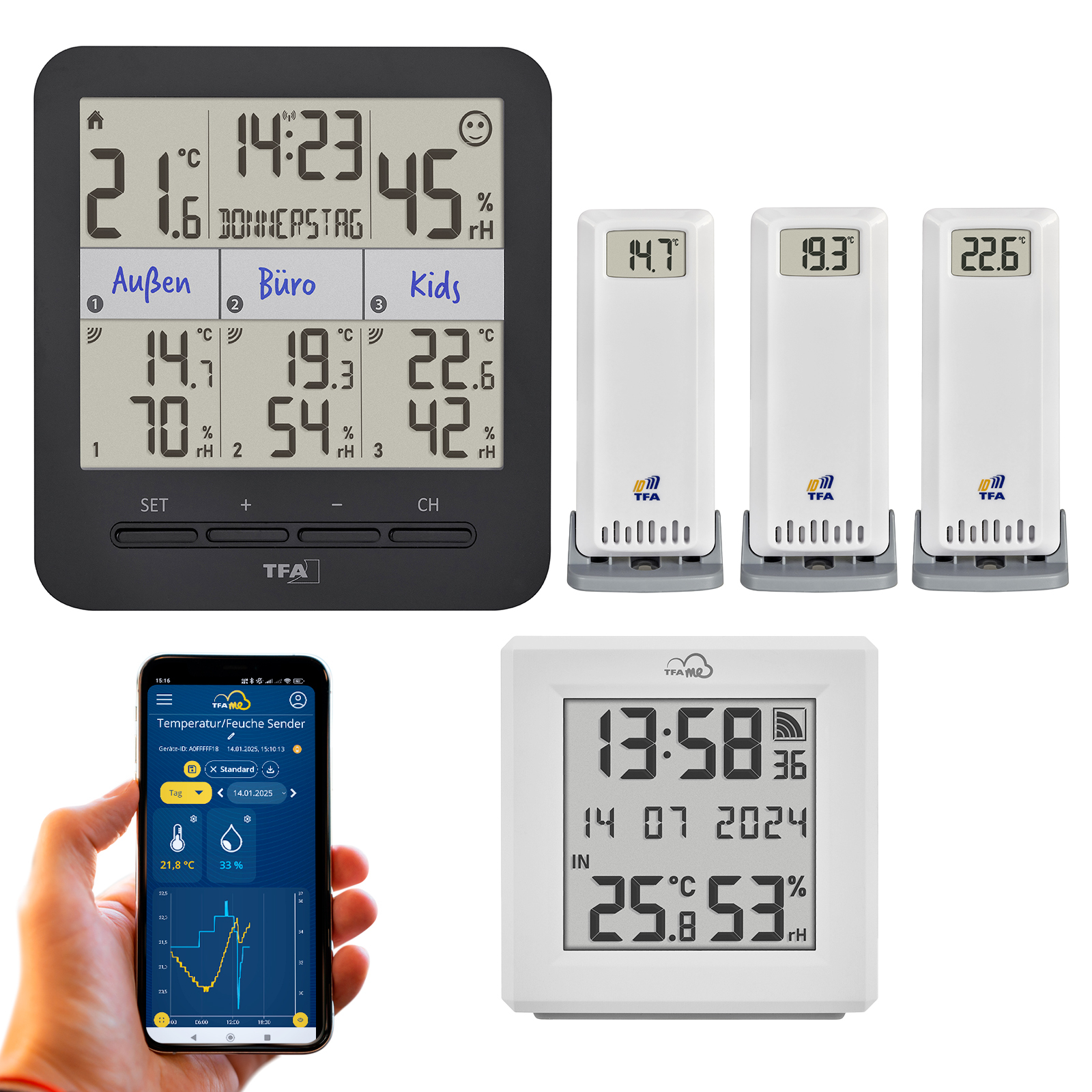
TFA.me Starter Set WIFI Gateway and KLIMA@HOME 2
Item number: 35.8109
Optimal indoor humidity describes the range of moisture in which people feel comfortable and in which neither mould nor excessively dry air develops.
The optimal indoor humidity level is between 40 and 60 %. These values create a comfortable indoor climate and help protect against mould and dry air.
Indoor air always contains moisture. It may contain more or less water vapour. Unlike temperature, people do not perceive humidity directly unless it is extremely low (as in a sauna) or extremely high (as in a greenhouse). Nevertheless, the right humidity level is extremely important for our health and well-being.
Further basic information and background on humidity can be found in our humidity guide.
Unlike absolute, relative or maximum humidity, optimal humidity is not a fixed value. It lies within a percentage range that is ideal for health, well-being and the condition of indoor spaces. In combination with the right temperature, this results in an optimal indoor climate.
People spend around two thirds of their lives indoors. Whether we feel comfortable in our homes depends largely on the quality of the indoor climate – in particular on temperature and humidity.
Both factors affect not only the health and well-being of occupants, but also the preservation and condition of the building and its furnishings.
Before mould develops or health is affected by air that is too dry, it is important to act by achieving the right combination of humidity and room temperature. Each room has its own optimal humidity level, depending on its use and characteristics.
Most people find a relative humidity of 40 to 60 % and a room temperature of 18 to 22 °C comfortable. This range is considered ideal for a healthy indoor climate. Perceived warmth varies depending on clothing, activity and surrounding surfaces.
The colder the wall surfaces are, the higher the air temperature must be to create a comfortable living environment. Well-insulated exterior walls therefore not only reduce heat loss, but also increase wall surface temperatures and improve overall living comfort.
The following table shows recommended values for optimal humidity and room temperature in different areas of the home:
| Room | Optimal Humidity | Optimal Temperature |
|---|---|---|
| Living room / Home office | 40 – 60 % | 20 – 22 °C |
| Bedroom | 40 – 60 % | 16 – 18 °C |
| Children’s room | 40 – 60 % | 20 – 23 °C |
| Kitchen | 50 – 70 % | 18 – 20 °C |
| Bathroom | 50 – 70 % | 20 – 23 °C |
| Hallway / Staircase | 40 – 60 % | 15 °C |
| Basement | 50 – 65 % | 10 – 15 °C |
To determine whether indoor humidity is within the optimal range, a measuring device is helpful. Detailed information on how humidity measurement works and what to consider can be found in our guide Measuring Humidity.
TFA.me Starter Set WIFI Gateway and KLIMA@HOME 2
Item number: 35.8109
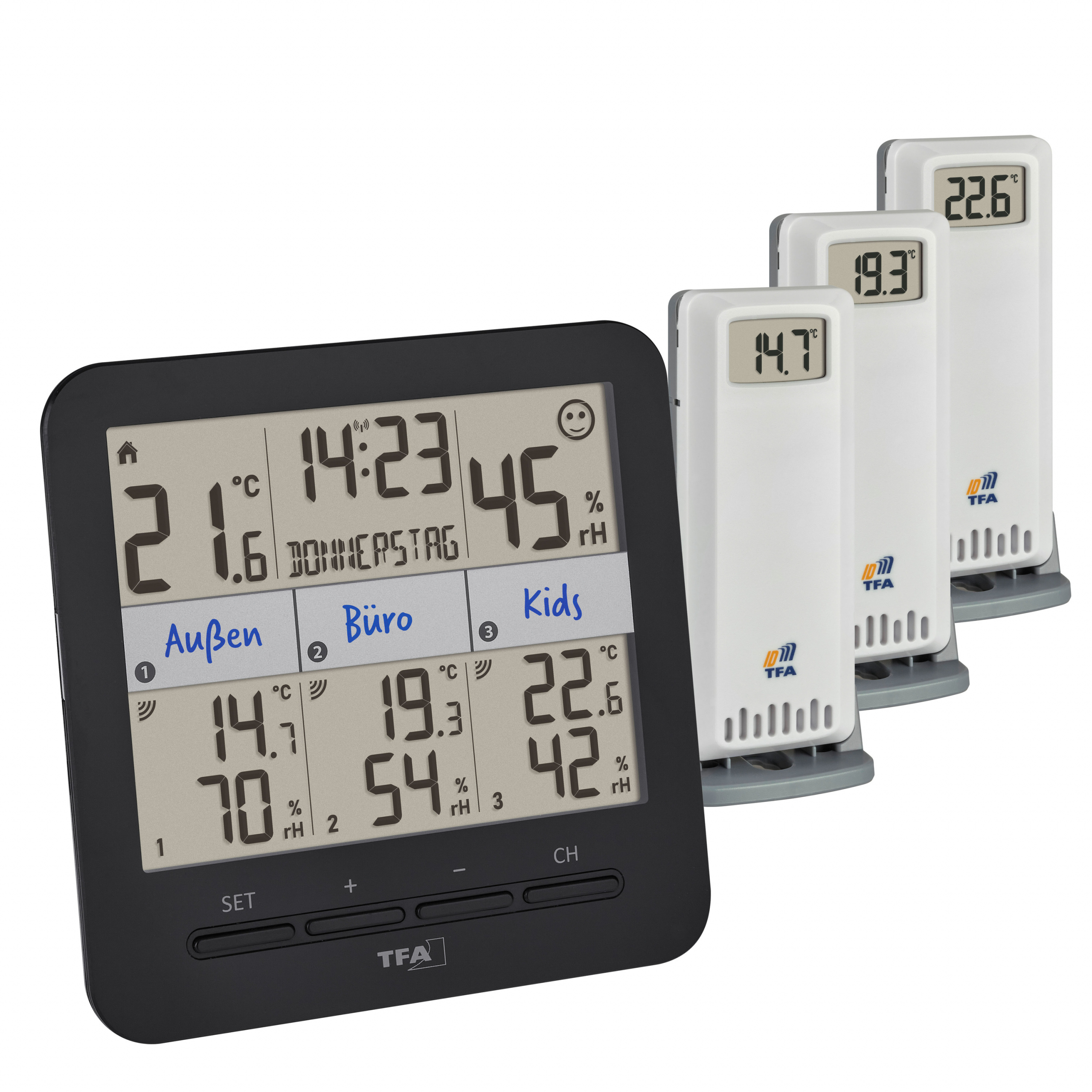
Wireless thermo-hygrometer with 3 transmitters KLIMA@HOME 2
Item number: 30.3075
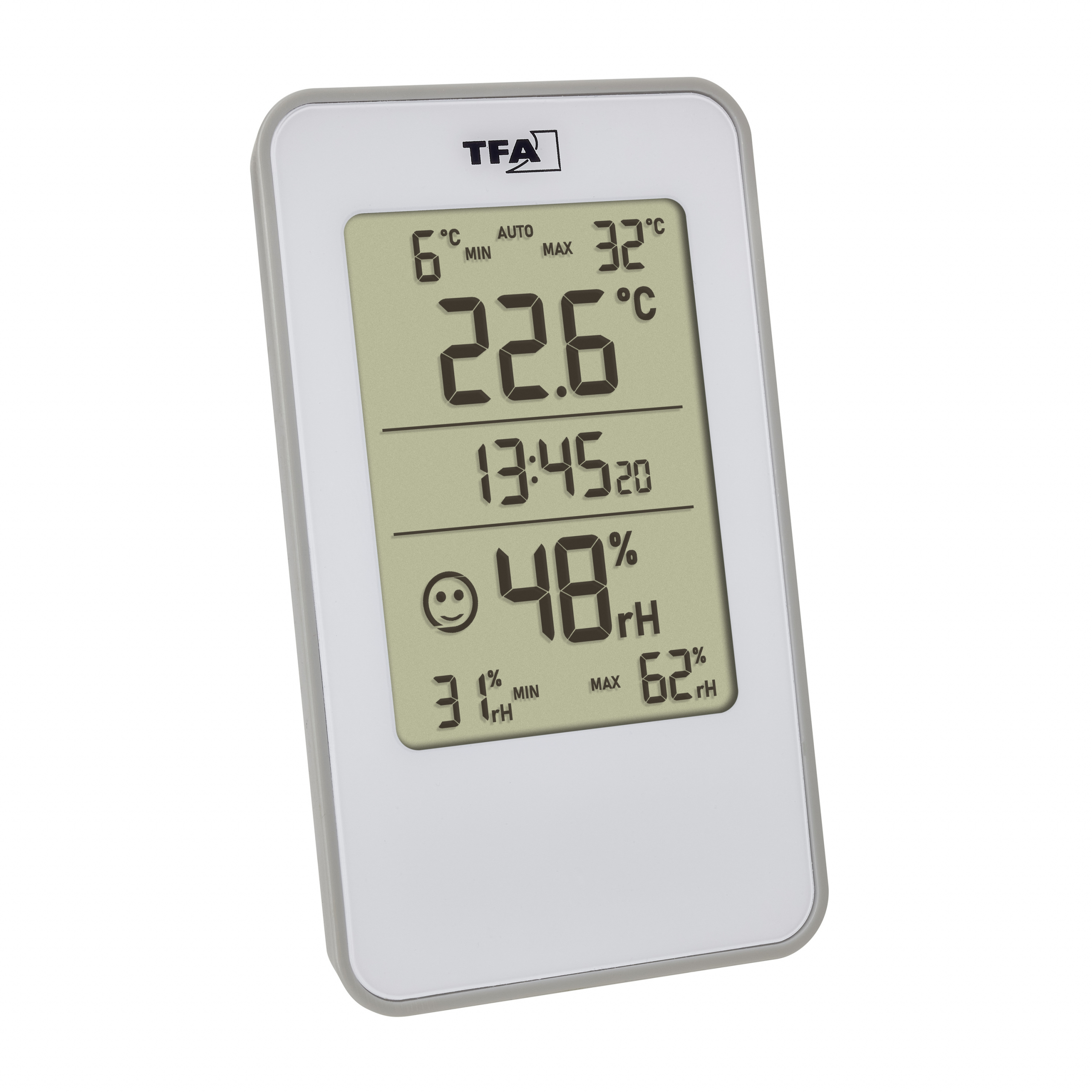
Item number: 30.5057
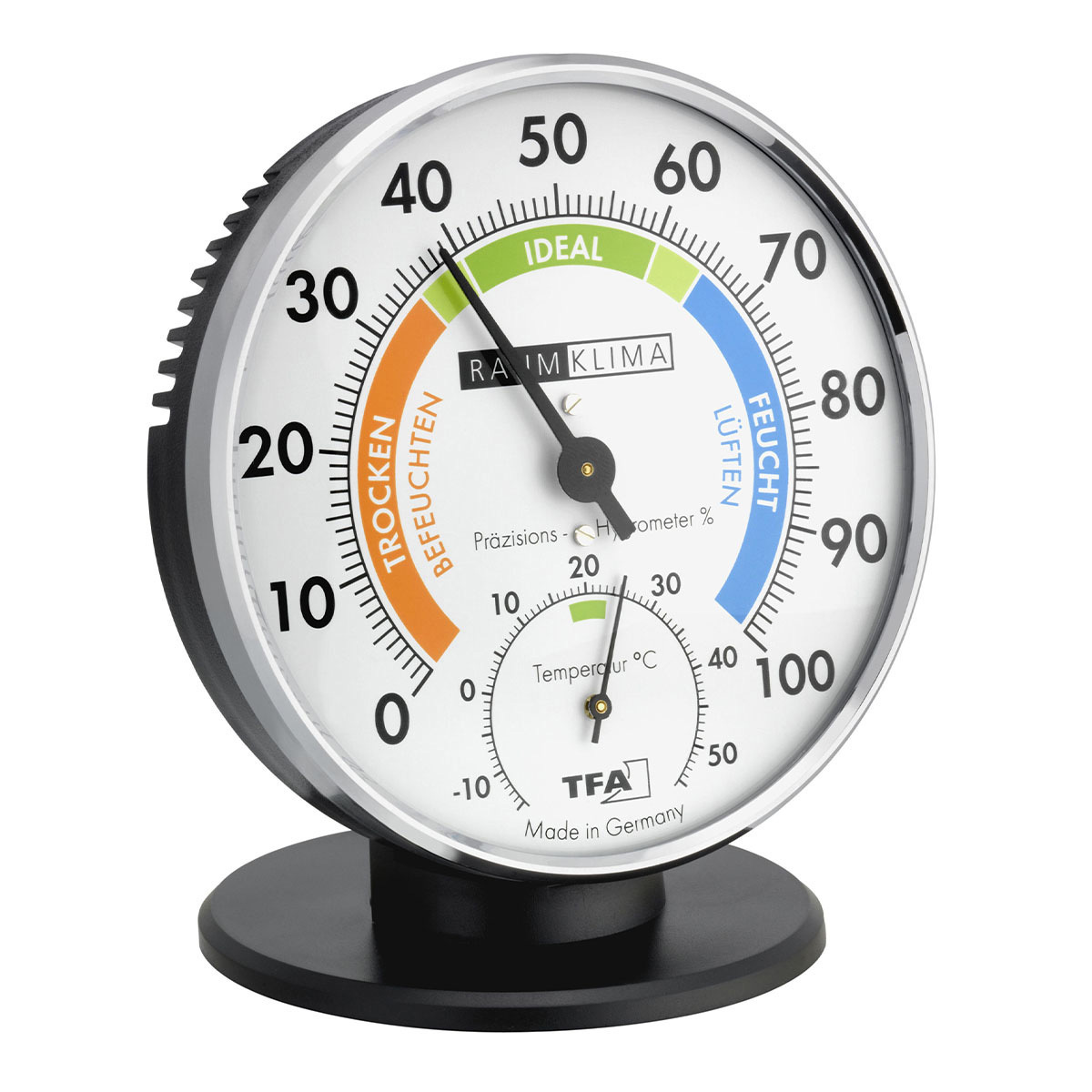
In bedrooms, the optimal humidity level ideally ranges between 40 and 60 %. Make sure that relative humidity is in the lower part of this range when going to bed. During sleep, breathing and perspiration increase moisture levels in the air.
Most people prefer cooler air in the bedroom than in living areas or bathrooms. The recommended room temperature here is 16 to 18 °C. Air that is too warm can cause uncomfortable sweating and may lead to sleep problems.
Even in winter, however, the bedroom temperature should not fall below 16 °C, as otherwise the dew point may be reached and mould could form on walls.